University of Colima - Faculty of Architecture and Design - Architecture Concepts - Student: Rincón Avalos José Arturo 2°B - In the following glossary you will find concepts seen in the activities during the first and second partial.
Air-entrained concrete
adjective+noun
Air-entraining in concrete is the intentional creation of small air bubbles in a batch by adding an air-entraining agent during mixing. A form of surfactant that allows bubbles of the desired size to form.
Example: "Furthermore, an air content check should be performed after any post-batching addition to an air-entrained concrete mixture"
es: Concreto con Aire Incorporado
Architectural concrete
adjective+noun
Architectural concrete refers to concrete that while providing an aesthetic finish to the building also serves a structural function.
Example: "In this brief overview we can clearly understand the use architectural concrete in several of its dimensions"
es: Concreto Arquitectónico
Asphaltic concrete
adjective+noun
Asphaltic concrete is a fancy word for “Asphalt”. Asphalt concrete is a composite material commonly used to pave roads, parking lots, airports, and the core of dams. It is composed of aggregates, such as crushed stone and sand, and fill mixed with petroleum asphalt.
Example: "In addition to evenness and correct location, continuous paving of the asphaltic concrete was an important aspect, too, on this job site"
es: Concreto Asfáltico (Asfálto)
Axis
noun
Line that crosses a body through its geometric center and divides it in the direction of its maximum dimension.
Main road of circulation that longitudinally crosses an area or a territory.
Example: "The axis of the road"
es: Eje
Backup Wall
noun
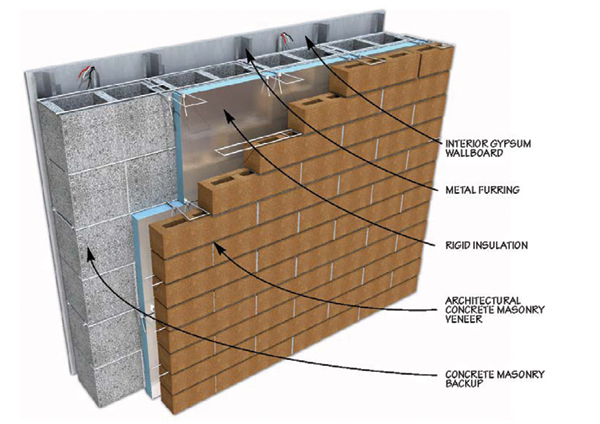
Common interior walls (backup walls) are cold-formed steel framed walls with water-resistant sheathing and concrete masonry.
Example: "Masonry ties fit in the horizontal mortar joints and are attached to the backup wall or structure"
es: Muro de Respaldo
Borders
noun
The edge or boundary of something, or the part near it.
Example: "The goods crossed the border after the customary inspection"
es: Bordes
Brick Courses
noun
A course is a layer of the same unit running horizontally in a wall. It can also be defined as a continuous row of any masonry unit such as bricks, concrete masonry units (CMU), stone, shingles, tiles, etc.
Example: "It's called a relief angle because it relieves the the weight from the brick courses below and transfers it to the structure"
es: Cursos de Ladrillo
Cellular concrete
adjective+noun
Cellular concrete is a mixture of cement, water, and preformed foam. The purpose of the foam is to supply a mechanism by which a relatively high proportion of stable air voids can be induced into the mixture and produce a cellular or porous solid upon curing of the mixture. Cellular concrete has lots of tiny air bubbles in it. It is commonly used on flat roofs to achieve a slope because it is light and has insulating properties.
Example: "Ytong mainly manufactures cellular cement blocks for partition and wall construction"
es: Concreto Celular
Colored concrete
adjective+noun
Colored concrete simply means it has an integral color (added to the mix), or has a color or stain added to the surface.
Colored concrete, also known as decorative concrete, allows traditional grey concrete to be stained and dyed different colors.
Example: "The building on that mountain uses colored concrete"
es: Concreto de Color
Concrete Block
noun
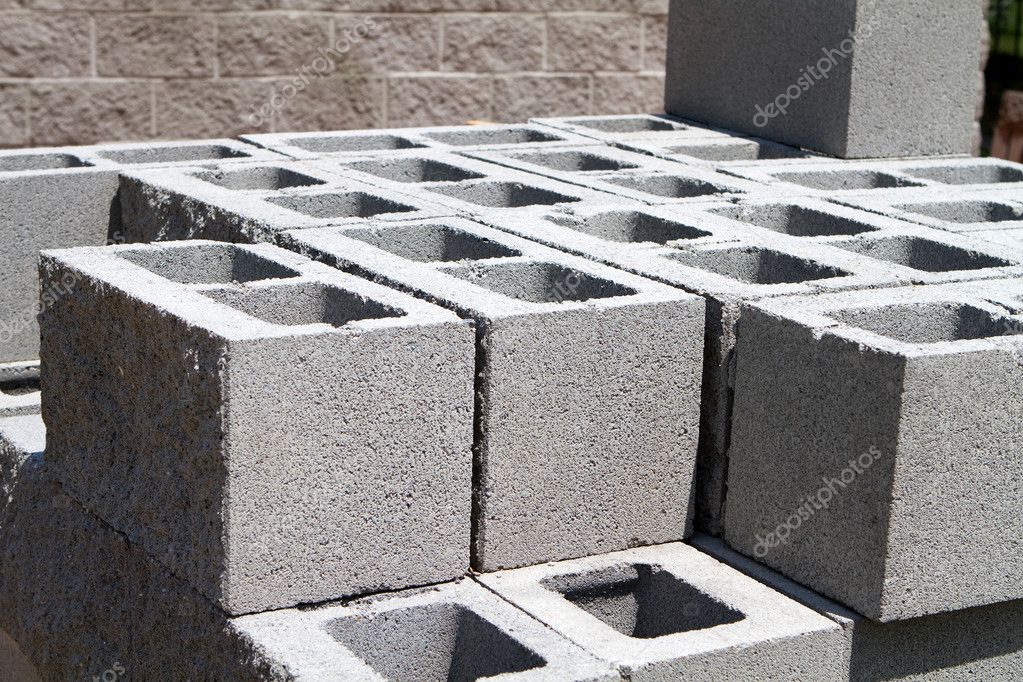
A concrete block is a prefabricated masonry, made with fine concrete or cement mortar, used in the construction of walls and walls. The blocks are prismatic in shape, with standardized dimensions, and are usually essentially hollow.
Example: "If the backup wall is concrete block, there are ladder-type systems that fit in the concrete block mortar joints"
es: Bloque de Concreto
Cured concrete
adjective+noun
Cured concrete means that the concrete has reached its design strength (the strength that the structural engineer intended). This depends on the type of concrete mix and other variables. Curing of concrete is defined as providing adequate moisture, temperature, and time.
Example: "The first building has a cured concrete floor and blocks with mortar walls"
es: Concreto Curado
Dovetail Insert
noun
A joint made by inserting tenon on one piece into mortise holes in the other. verb. fit together tightly, as if by means of a dovetail. type of: fit. make fit.
Example: "Here's a dovetail masonry anchor that fits in a dovetail insert"
es: Inserto de Cola de Milano
Exposed concrete
adjective+noun
Exposed concrete refers to concrete whose surface is a visible part of the architectural and interior design of the building. Strictly speaking, this refers to concrete surfaces that were in contact with the formwork shell when they were produced.
Example: "The labs are located behind a wall made of exposed concrete in the middle part of the building"
es: Concreto Expuesto
Gravity Load
noun
Gravity loads are body loads available only in Structure. These loads simulate the force of gravity as it affects your model. When you define a gravity load, you specify the gravitational components of the load in each coordinate direction.
Example: "The centre of gravity of the load is too high"
es: Carga de Gravedad
Green concrete
adjective+noun
Green concrete" refers to fresh concrete that is uncured or isn't strong yet. It comes from the term "green lumber." Green lumber is wood that has been freshly cut, and isn't dry or ready to use yet. Green concrete is defined as a concrete which uses waste material as at least one of its components, or its production process does not lead to environmental destruction, or it has high performance and life cycle sustainability.
Example: "The result is green concrete, with enhanced concrete durability"
es: Concreto Verde
Hanging Off
noun
To be suspended from something
Example: "The ornaments hang off the chandelier"
es: Colgando de
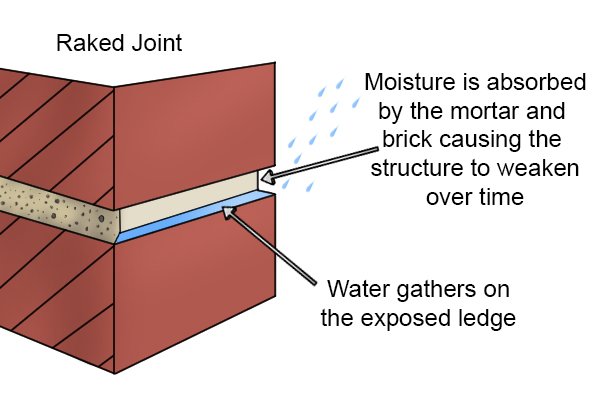
Horizontal Mortar Joints
noun
The straight, inclined surfaces of the bed (horizontal) joints tend to catch the light and give the brickwork a neat, ordered appearance. This joint is less compacted than the concave and V-joints, although it is still suitable for exterior building walls.
Example: "Masonry ties fit in the horizontal mortar joints and are attached to the backup wall or structure"
es: Juntas de Mortero Horizontales
Insulating concrete
adjective+noun
Insulating concrete is similar to cellular concrete, except it uses perlite or lightweight foam aggregate. Insulated concrete formwork or insulated concrete formwork is a formwork system for reinforced concrete usually made with a rigid thermal insulation that remains in place as a permanent interior and exterior substrate for walls, floors and ceilings.
Example: "High-quality sound absorbing flooring presents a cost-effective supplement to sound-insulating concrete slabs and floating screed"
es: Concreto Aislante
Ladder-Type Systems
noun
Ladder system means two main air lines, generally one each side of the railway tracks, cross connected at regular intervals and able to be fed from any direction.
Example: "If the backup wall is concrete block, there are ladder-type systems that fit in the concrete block mortar joints"
es: Sistemas Tipo Escalera
Landmark
noun
An object or feature of a landscape or town that is easily seen and recognized from a distance, especially one that enables someone to establish their location.
Example: "The spire was once a landmark for ships sailing up the river"
es: Hito
Laterally
noun
At, toward, or from the side or sides; sideways.
Example: "They tie the brick back to the structure and support it laterally."
es: Lateralmente
Masonry Ties
noun
Are used in buildings with cavity walls. They are used to join the two leaves of a cavity wall together, allowing the two parts to act as a homogeneous unit.
Example: "Masonry ties fit in the horizontal mortar joints and are attached to the backup wall or structure"
es: Lazos de Albañilería
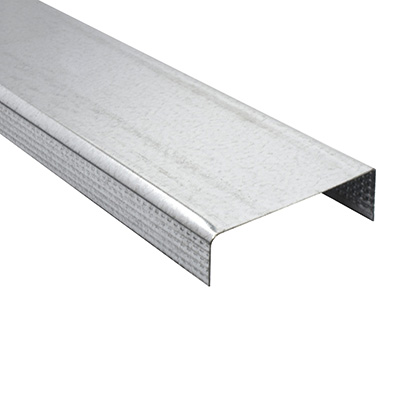
Metal channel
adjective+noun
A channel for Drywall is a metallic structure whose manufacture is made with galvanized sheet.
Example: "The metal channel is used to fix partition walls and ceiling."
es: Canal Metálico
Metal decking
adjective+noun
Metal decking is corrugated metal sheeting that's used as a structural roof deck or composite floor deck.
Example: "Metal decking has a high strength-to-weight ratio which decreases erection and material handling cost."
es: Tarima metálica
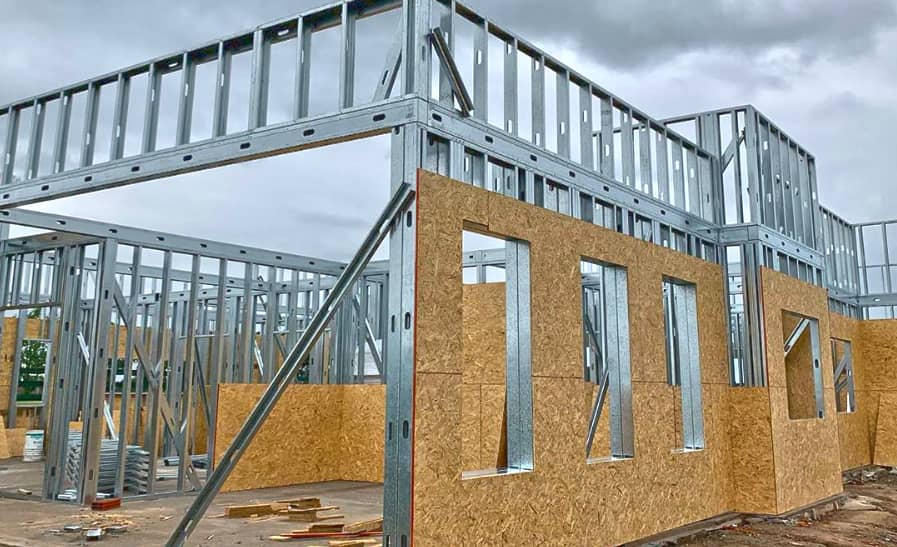
Metal framing
adjective+noun
Metal framing usually refers to cold-formed, light gauge studs, channels and other shapes.
Example: "The metal framing can be structural if it is engineered."
es: Estructura metálica
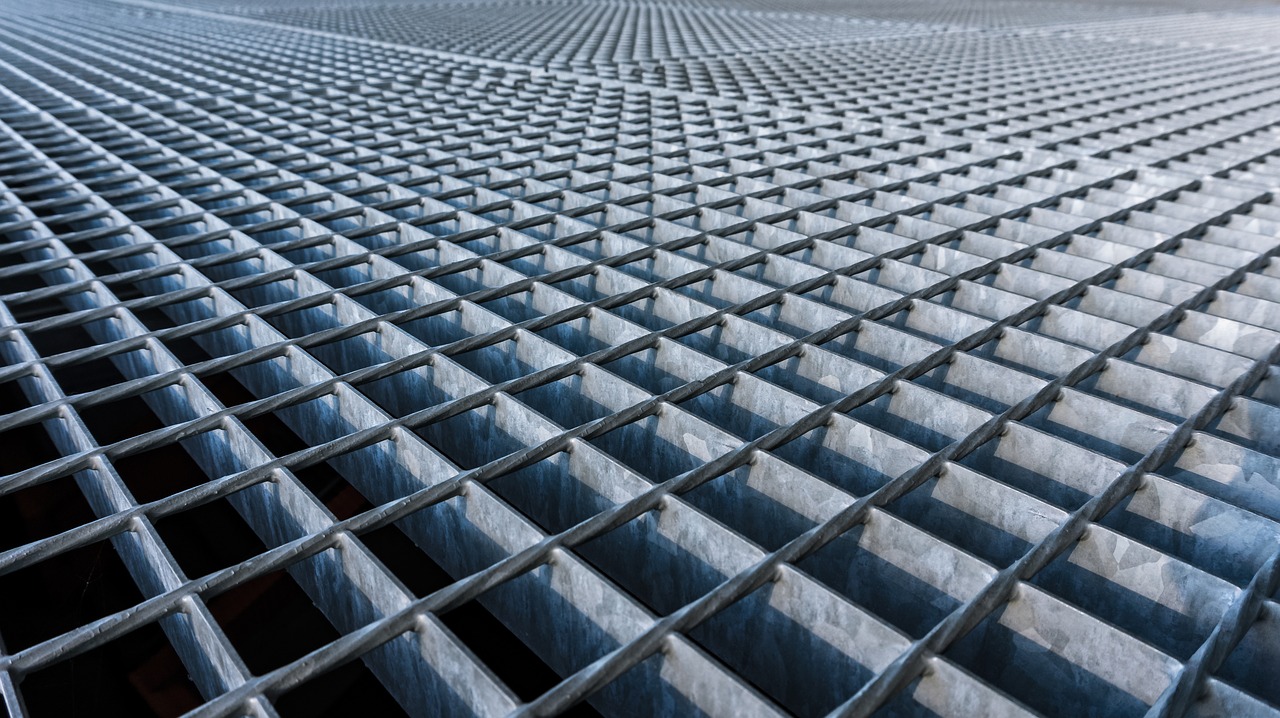
Metal grating
adjective+noun
Metal grating as a whole allows for proper drainage, ventilation, and safety measures across a variety of industries.
Example: "A Metal grating is any regularly spaced collection of essentially identical, parallel, elongated elements."
es: Rejilla metálica
Metal panel
adjective+noun
Metal panel is a general term describing any flat, thin sheet of metal. It can be any type of metal (stainless steel, aluminum, titanium, etc.).
Example: "Architectural metal panels are a type of exterior siding that is generally used on large commercial and high-rise buildings."
es: Panel metálico
Metal rod
adjective+noun
Metal rods are metals and alloys designed in the pattern of round bars or rod, rectangular or flat bars, square bars, hexagons, and other patterns of bar stock.
Example: "She has a metal rod and has a fear of water."
es: Varilla metálica
Metal roofing
adjective+noun
A metal roof is a roof system made of metal pieces or tiles characterized by high strength, waterproofness, and longevity.
Example: "Metal roofing has long been used around the world as a standard roofing material."
es: Techo metálico
Metal stud
adjective+noun
It refers to the construction of walls and planes using cold-formed steel components.
Example: "Metal studs are available in many of the same basic dimensions as wood studs."
es: Perno metálico
Metal tubing
adjective+noun
Metal tube is made of metallic elements or alloys and is designed for specific industrial applications.
Example: "Compared to other types of tubing, metal tube is stronger and most robust."
es: Tubería metálica
Multi-Story
noun
Having more than two stories a multistory apartment building.
Example: "Relief angles, support the gravity load or weight of the brick on multi-story buildings"
es: De Varios Pisos
Node
noun
A point at which lines or pathways intersect or branch; a central or connecting point.
Example: "The intersections of two or more such arteries would clearly become major nodes of traffic and urban activity"
es: Nodo
Plot
noun
It is the uniform repetition of certain elements in two directions, for facades or floors; and in three directions if space is considered.
Example: "The builder evened the plot of land to build a house"
es: Trama
Porous concrete
adjective+noun
‘Porous’ describes a material that has ‘pores’. Pores are tiny spaces or voids in a material. A porous material allows water to pass through. Cotton, bread, loamy soil, and paper are all porous materials. Porous concrete is also called ‘pervious’ concrete’ or ‘permeable concrete’. It’s a popular way to reduce storm water runoff and helps save the planet.
Example: "Porous concrete allows rainwater to seep in and reduces flooding, prevents skids on wet roads"
es: Concreto Poroso (Concreto Permeable)
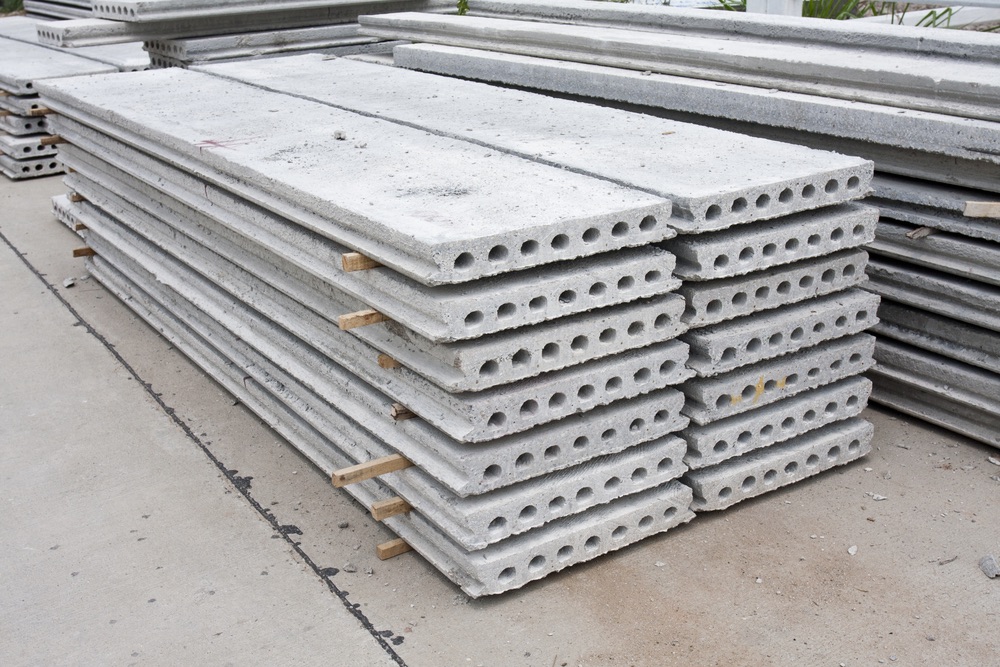
Precast concrete
adjective+noun
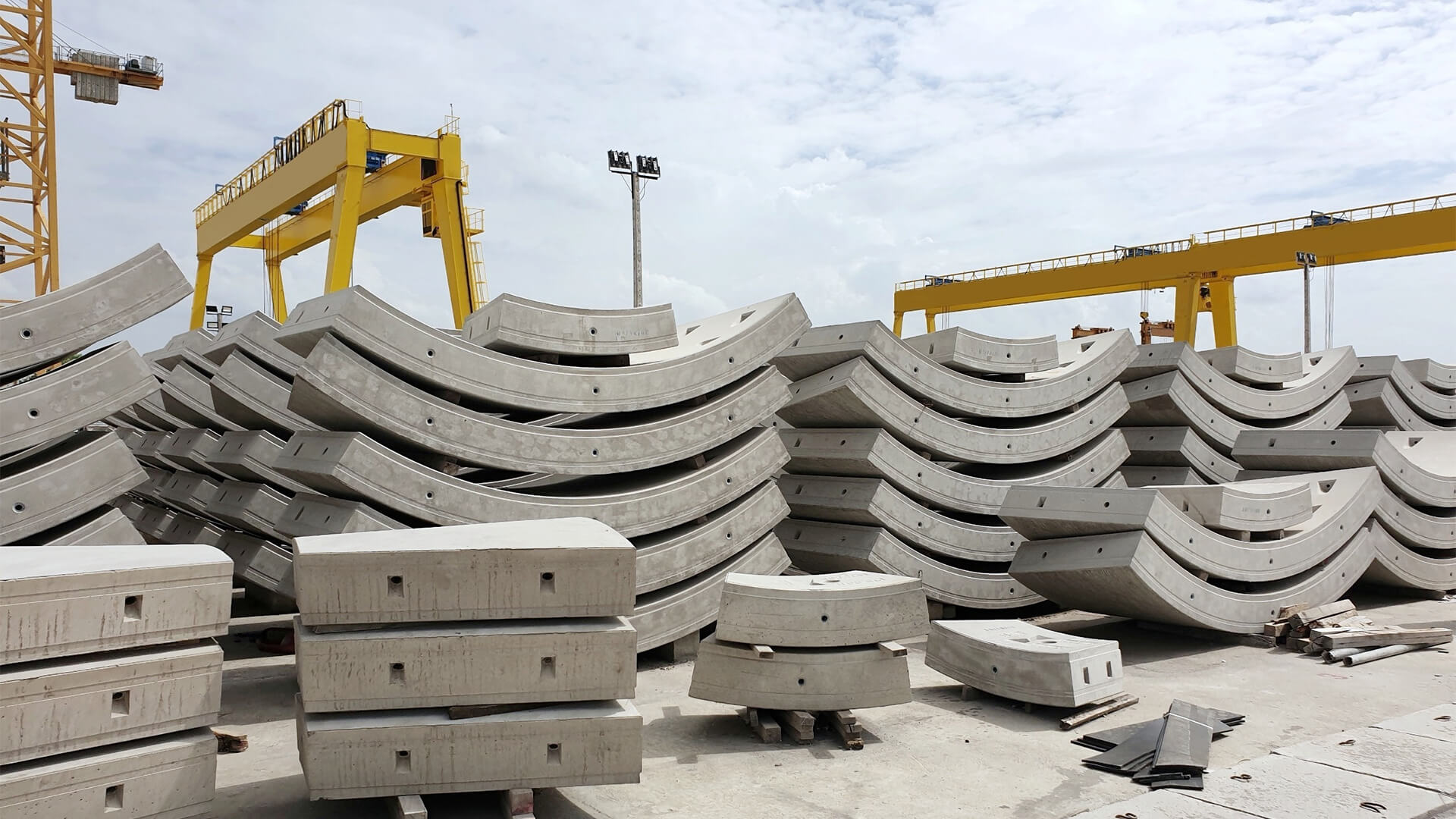
The latin prefix ‘pre’ means ‘before.’ Precast concrete was cast (made) BEFORE arriving at the construction site. Precast is often used where there are many similar shapes and sizes (repetition). It also allows for more quality control and a better finish.
Example: "The floors are precast concrete panels topped with insulation and screed, and sit on a strip foundation"
es: Concreto Prefabricado
Prestressed concrete
adjective+noun
Prestressed concrete refers to the construction technology of concrete structural elements intentionally subjected to compressive stresses prior to their commissioning. Said efforts are achieved by means of steel bars, wires or wire cables that are tensioned and anchored to the concrete.
Example: "This building was made from lightened prestressed concrete and slabs"
es: Concreto Pretensado
Reinforced concrete
adjective+noun
Concrete in which wire mesh or steel bars are embedded to increase its tensile strength.
Example: "This course explores the design of reinforced concrete structures"
es: Concreto Armado
Relief Angle
noun
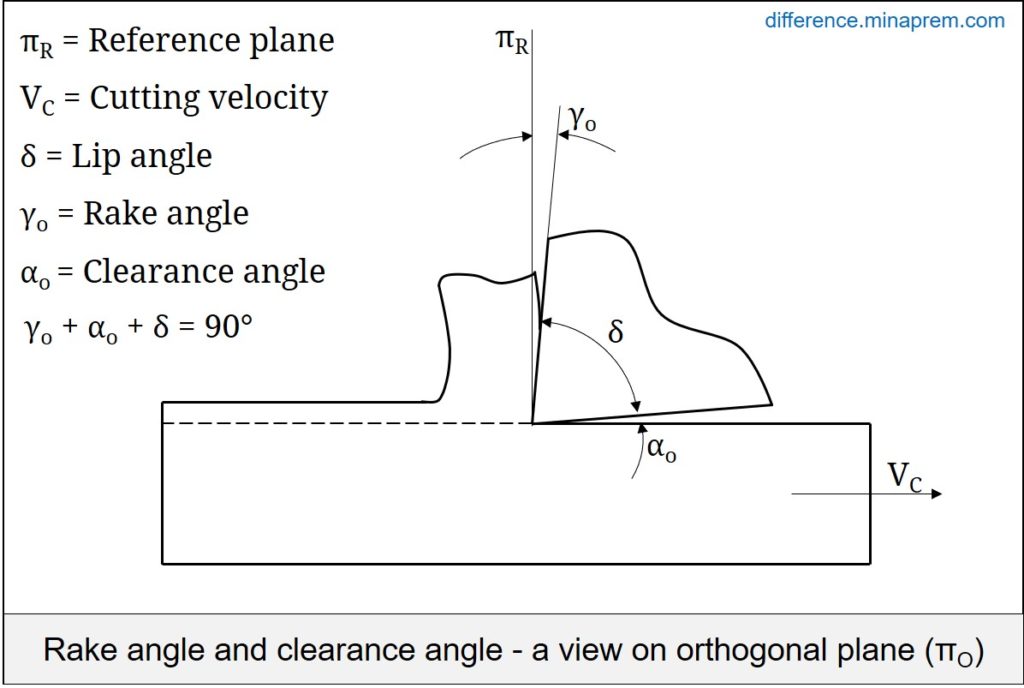
A Side Relief Angle is an angle between the part of the flanks of a cutting tool below the cutting edge and a plane perpendicular to the base.
The relief angle (shelf angle) supports the weight of the brick veneer at each floor.
Example: "In the cavity wall lesson, the relief angle is shown attached to the concrete slab edge with a wedge anchor"
es: Ángulo de Alivio
Routes and Circulation
noun
Circulation routes are the pathways people take through and around buildings or urban places. Circulation is often thought of as the 'space between the spaces', having a connective function, but it can be much more than that.
Example: "Drivers were forced to drive convoluted routes to get to their destination, resulting in higher prices"
es: Trayectos y Circulación
Steel angle
adjective+noun
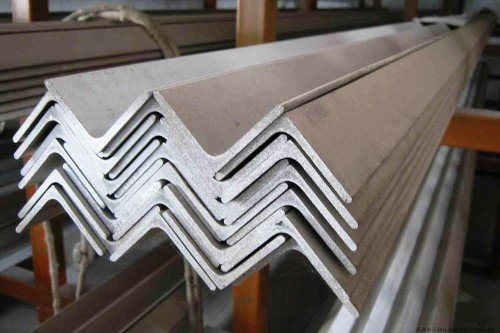
A steel angle is an L-shaped profile manufactured by section rolling mills or bending machines.
Example: "Steel angles are the bread and butter of steel fabrication"
es: Ángulo de acero
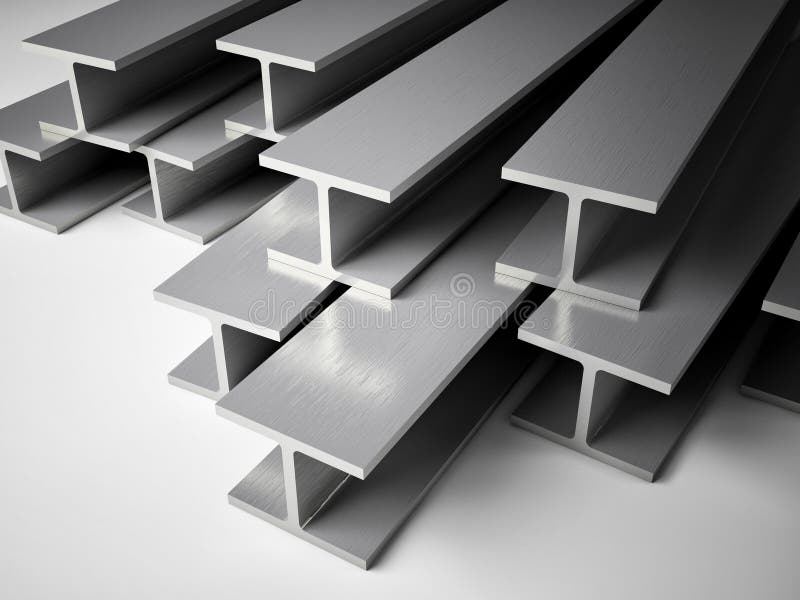
Steel beam
adjective+noun
A steel beam is a structural steel product that is made to support heavy loads.
Example: "The steel beams come in different sizes and types."
es: Viga de acero
Steel column
adjective+noun
A steel column is a vertical structure member used in construction to provide essential support.
Example: "Steel columns have good compressive strength, but have a tendency to buckle or bend under extreme loading."
es: Columna de acero
Steel framing
adjective+noun
Steel frame is a building technique with a "skeleton frame" of vertical steel columns and horizontal I-beams, constructed in a rectangular grid to support the floors, roof and walls of a building which are all attached to the frame.
Example: "The steel frame provides structural support for other building elements."
es: Estructura de acero
Steel joist
adjective+noun
Steel joists are open web lightweight steel trusses consisting of parallel chords and a triangulated web system, proportioned to span between bearing points.
Example: "Steel joist placement plans do not require the seal and signature of the joist manufacturer’s registered design professional."
es: Vigueta de acero
Steel member
adjective+noun
It is a support that is a constituent part of any structure or building
Example: "Steel members are any part of a primary structural system."
es: Miembro de acero
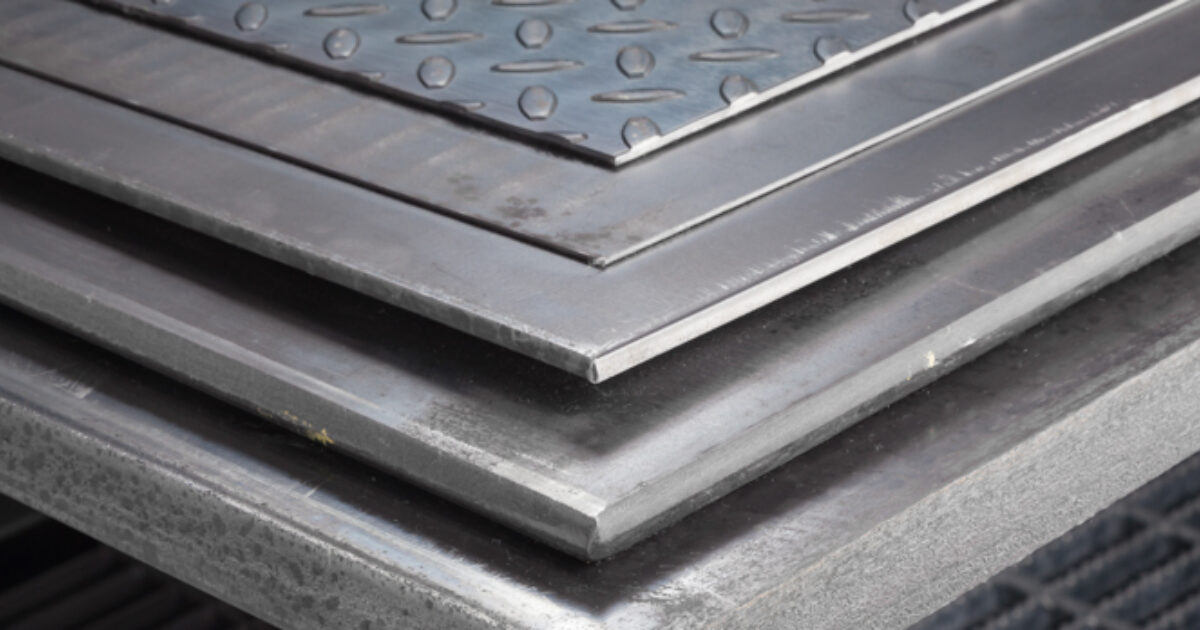
Steel plate
adjective+noun
Steel Plate, or structural steel is simply steel sheet material that can be customarily cut and welded to develop a more elaborate product. It is made by compressing multiple steel layers together into one; forming a plate of steel.
Example: "Steel plate is a material often used to create metal products."
es: Placa de acero
Steel reinforcement
adjective+noun
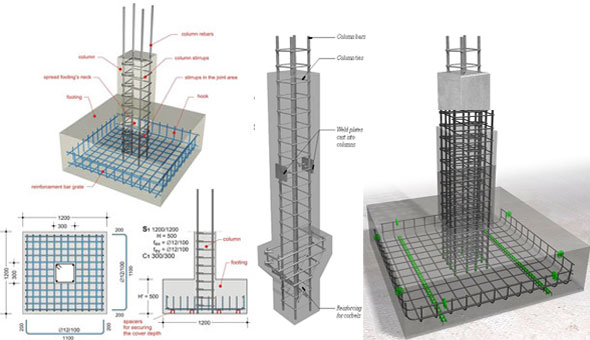
Rebar, also known as reinforcement steel and reinforcing steel, is a steel bar or mesh of steel wires used in reinforced concrete and masonry structures to strengthen and hold the concrete in tension.
Example: "Steel reinforcement are steel bars that are provided in combination with plain cement concrete to make it reinforced concrete."
es: Refuerzo de acero
Steel reinforcing
adjective+noun
Reinforcing steel, (Usually called rebar and mesh) is made from a raw material called iron ore. It is used in concrete to provide additional strength, as concrete is weak in tension and steel is strong in tension and compression.
Example: "Reinforcing steel typically consists of carbon steel, which is hot rolled with deformation patterns."
es: Acero de refuerzo
Steel rod
adjective+noun
Steel rods, called rebars, placed in the lower portion of a concrete slab prevent that slab from cracking when subjected to that tensile bending force.
Example: "They use a steel rod to imprint the coin's design in it with a hub bearing a relief image of the design."
es: Varilla de acero
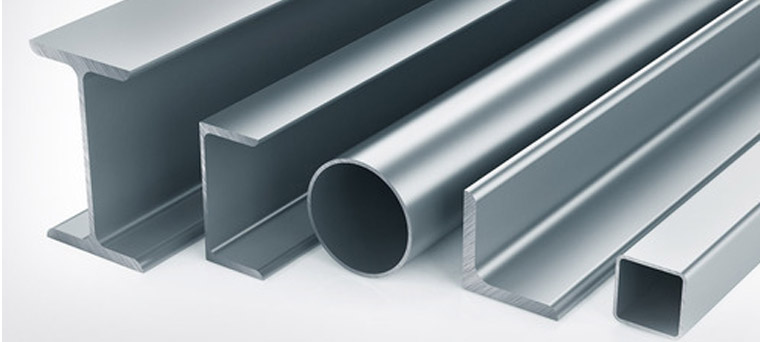
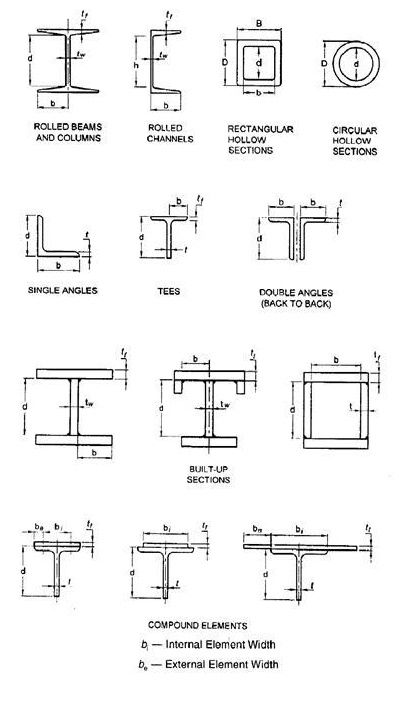
Steel sections
adjective+noun
Steel section describes the profile or shape of a structural steel member. Engineers use the section properties for their calculations.
Example: "Galvanised sheet steel section complete with three air calibration dampers and galvanised sheet steel louvers."
es: Secciones de acero
Supports
noun
Thing that receives the weight of another and prevents it from wobbling or falling.
Example: "The support prevents the roof from collapsing."
es: Soportes
Tie Back
noun
Join or fasten one thing to another with ropes, cords or similar materials.
Example: "Tie your shoes"
es: Atar
Transfers
noun
To move a person or thing from one place to another.
Example: "The chair was transferred to another place"
es: Transferencias
Unreinforced concrete
adjective+noun
Unreinforced concrete simply means that it doesn’t have any steel reinforcement (rebar, welded wire fabric, or post-tensioning).
Example: "The floor of the septic box is typically made of unreinforced concrete thick enough to withstand uplift pressure when the tank is empty"
es: Concreto no Armado
Urban Legibility
noun
Legibility means the possibility of organizing an environment within an imageable and coherent pattern.
Example: "The Urban Legibility of that city is quite clear"
es: Legibilidad Urbana
Wedge Anchor
noun
Is a generic term for a type of anchor used to fasten a variety of materials to concrete.
Example: "In the cavity wall lesson, the relief angle is shown attached to the concrete slab edge with a wedge anchor"